
New Zealand Ecovillage Tour
10 DAYS | March 10-19, 2027
Experience New Zealand's Inspiring Communities
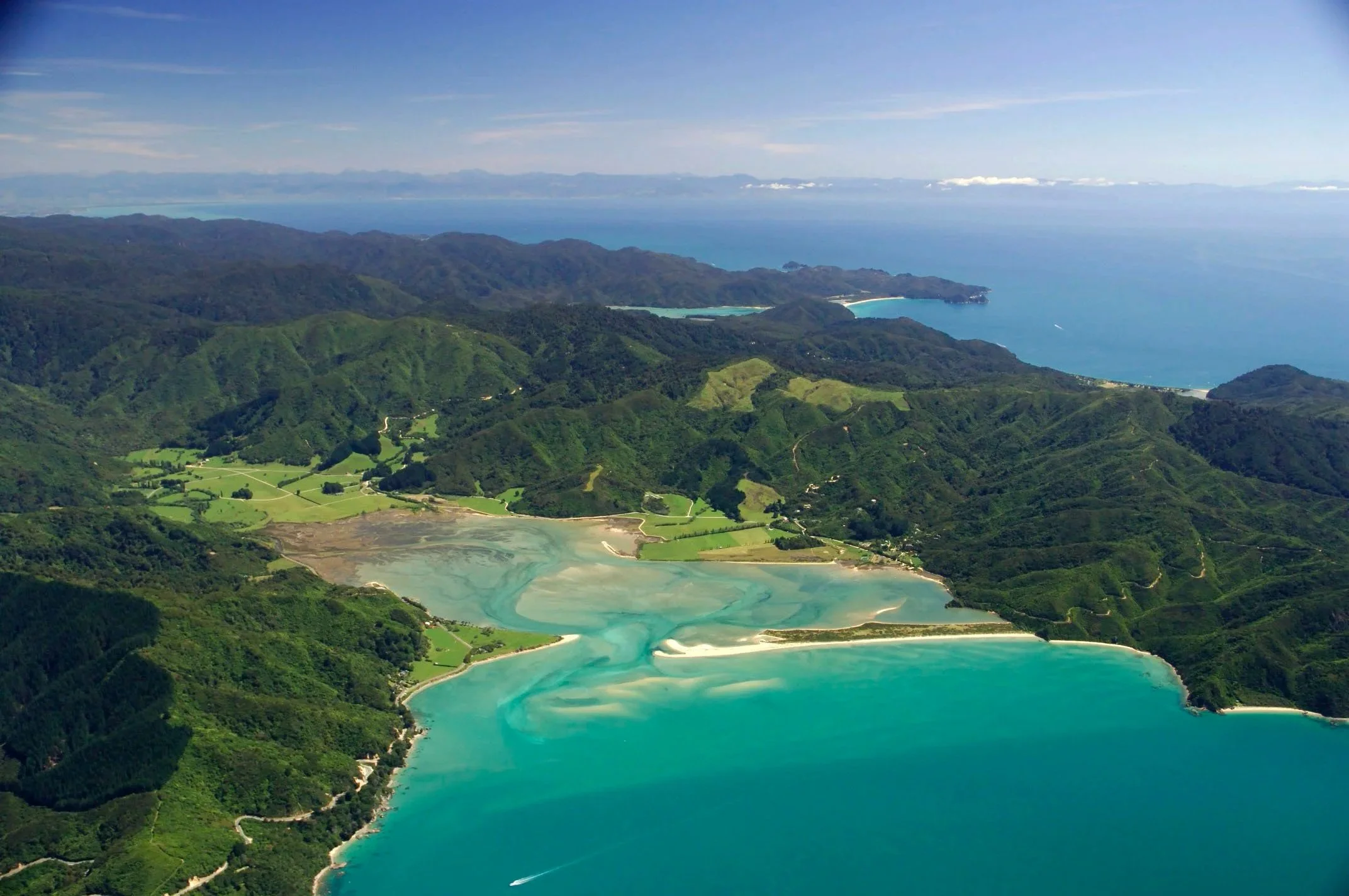
Join us for an unforgettable journey through the beautiful Nelson-Tasman region of New Zealand's South Island, home to some of the country's most established intentional communities and ecovillages. Guided by longtime community founder Robina McCurdy, you'll enjoy rare behind-the-scenes access to communities that are not typically open to casual visitors or tour groups.
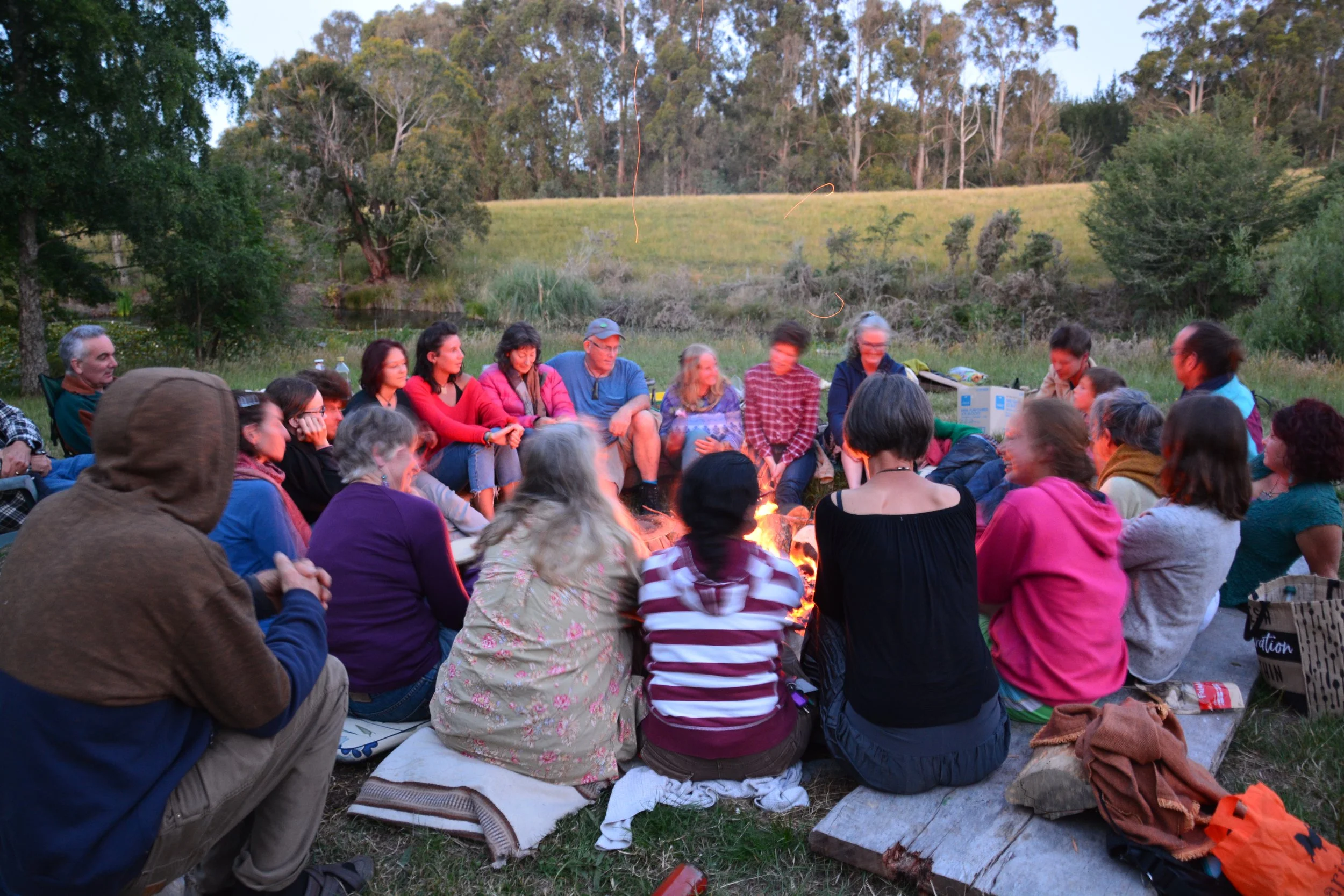
Meet founders and residents, explore innovative approaches to community living, and discover real-world examples of natural building, regenerative land stewardship, shared decision-making, and sustainable living. Along the way, you'll experience stunning landscapes, vibrant local culture, and the warmth of traveling with a group of like-hearted people.
Whether you're curious about joining a community, creating one, or simply seeking inspiration, we invite you to join us foran extraordinary adventure in one of Earth’s most majestic landscapes.
New Zealand Ecovillage Tour
Next tour dates:
March 10-19, 2027
Super early bird for the first 5 spots
Save 20% off the normal tour price.
Tour Highlights
What you can look forward to on your trip to New Zealand.
Explore 9 Intentional Communities
Meet founders and residents, explore diverse community models, and enjoy insider access through our tour guide Robina's long-standing relationships throughout the region.
Learn from Real-World Regenerative Living
Learn practical approaches and discover the long-term benefits of regenerative land stewardship, natural building, shared decision-making, and sustainable living.
Experience the Beauty and Culture of New Zealand's South Island
Explore the stunning Nelson-Tasman region, including its remarkable natural landscapes, local markets, organic gardens, Māori culture, and some of the most vibrant community projects in Aotearoa, "Land of the Long White Cloud."
Tour Itinerary
Below is an overview of your days during your time in New Zealand.
Day 1: Meet your adventuresome group in Nelson and settle into Riverside Community, one of New Zealand's longest-running intentional communities.
Day 2: Explore Riverside's farms, gardens, businesses, and social systems while learning how this thriving community functions.
Day 3: Visit the ecovillage of Atamai and experience Māori culture and community life at Te Awhina Marae.
Day 4: Explore Braemar Ecovillage, browse the famous Nelson Market, and visit the peaceful hilltop community of Wantoowantoo.
Day 5: Discover Kōwhai Cohousing and go behind the scenes of the iconic Mussel Inn, a community-focused local business.
Day 6: Visit sacred springs, a sustainable living center, and Rainbow Valley Community, one of New Zealand's most established ecovillages.
Day 7: Arrive at Tui Community for an in-depth exploration of its history, land stewardship, buildings, and social systems.
Day 8: Experience daily life at Tui through its gardens, food systems, cooperative business, and opportunities to connect more deeply with community life.
Day 9: Explore a residential yoga community, enjoy time in nature, and conclude the journey with a celebration and completion ceremony.
Day 10: Depart Golden Bay or continue your New Zealand adventure.

Featured Communities
Below are the communities and projects we’ll visit during the trip.
Riverside Community
Location: Moutere, Tasman Region, NZ
Accepting New Members: Yes
Land Size: ~40 hectares (approx. 100 acres)
Website: https://www.riverside.org.nz
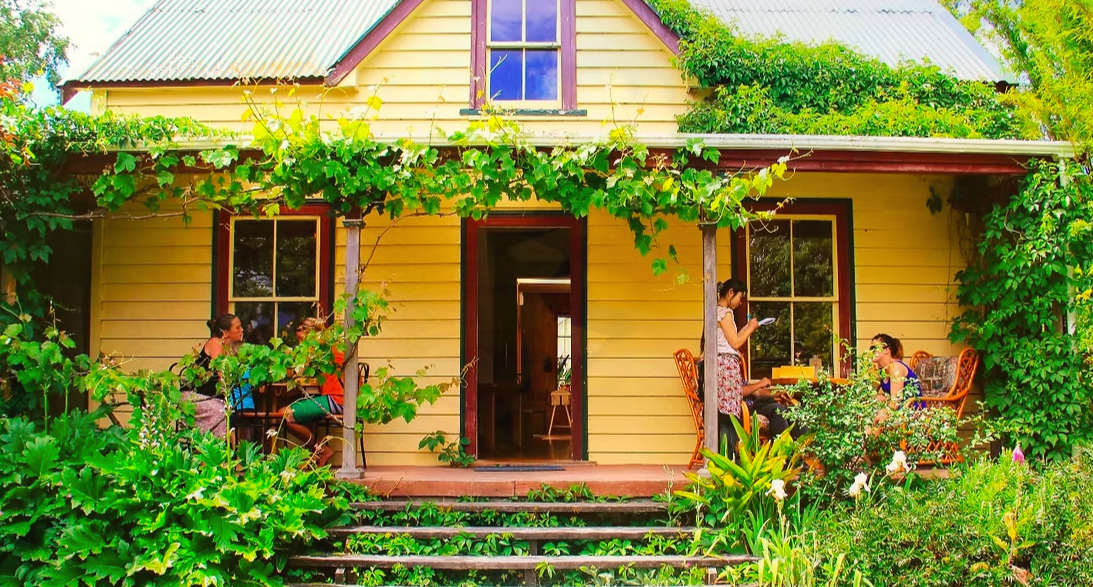
Riverside Community is one of New Zealand’s longest-standing intentional communities, located in a peaceful rural setting near Motueka and Abel Tasman National Park. Founded in 1941 by Christian pacifists, it has evolved into a vibrant, pluralistic community rooted in values of peace, cooperation, sustainability, and service. Alongside the residential community, the Riverside Community Trust—established in 1953—continues to support educational initiatives, charitable work, and outreach programs that benefit the wider New Zealand public. The Trust offers workshops, classes, and events throughout the year, and manages shared spaces such as the Riverside Cultural Centre, which hosts activities ranging from yoga and crafts to community gatherings.
Today, Riverside functions as a dynamic rural settlement where 60 – 80 residents (including children) live in family homes which are owned and maintained by the Trust. Many residents work in Riverside’s shared enterprises, such as dairying, forestry, gardens and café. They also actively participate in community life initiatives such as weekly wider community lunches, working bees and other volunteer efforts that support both the land and the Trust’s broader mission.
Tui Community
Location: Golden Bay, Tasman Region, NZ
Accepting New Members: Yes
Land Size: 50 hectares (approx. 125 acres)
Website: https://www.tuitrust.org.nz/
Tui Community is a well-established intentional community of 35 people, located in Wainui Inlet, Golden Bay, on the edge of Abel Tasman National Park. Founded in 1984, Tui was created with the intention of developing a sustainable and cooperative way of living in harmony with the land, and to share our learnings with others. Over the years, the community has continued to evolve, with a mix of long-term residents and a strong focus on low-impact lifestyles, ecological practices, and conscious community living.
The community integrates practical sustainability—such as permaculture, land stewardship, and natural building—with a focus on personal growth, communication, and group process. Tui also hosts a variety of educational programs and retreats, well as volunteer opportunities throughout the year. It has two primary long-term successful community businesses: ‘Tui Balms’ which makes a range healing products, and ‘The Treefield’, an outdoor education venue which hosts a range of educational and cultural experiences, especially Rites of Passage events. Visitors can expect to experience a deeply intentional and reflective community environment, participate in shared activities or workshops, and gain insight into both the interpersonal and ecological dimensions of long-term community life.
Te Awhina Papakāinga
Location: Motueka, Tasman Region, NZ
Accepting New Members: No
Land Size: 1–2 hectares (approx. 4 acres)
Te Āwhina Marae is a fully-fledged marae (community centre) for the whanau (extended family), hapū (sub-tribe), and iwi (tribe) of the Motueka area. It welcomes all people to gather, learn, connect, seek shelter and find hospitality. It is a place where local whakapapa (geneology) is celebrated, indigenous language upheld, and tikanga (customs & protocol ) is kept alive.
For the past 15 years, Te Āwhina Marae has been undertaking the planning and implementation of a major redevelopment of the marae complex or community centre. To meet the whanau’s cultural, spiritual and physical needs, it is planned to be efficiently designed, resilient to natural hazards and environmentally and financially sustainable for the next 100 years. There are four stages to the redevelopment, one of which is the Papakāinga (ecovillage) Housing Development. Six flats were opened in 1992, to provide low cost and secure housing for Kaumātua (elders) and re-establish Te Āwhina Marae as a pā (community settlement). A new 20-home Papakāinga, was completed in 2024, offering 20 low-cost rental homes for whānau. The Papakāinga also features a shared community building for the exclusive use of whānau tenants.
Kōwhai Cohousing
Location: Tākaka, Golden Bay, Tasman Region, NZ
Accepting New Members: Yes
Land Size: Total Area 14.5 hectares (approx. 35 acres)
Neighbourhood: ~1–2.5 hectares (approx. 5 acres)
Website: https://takakacohousing.co.nz/
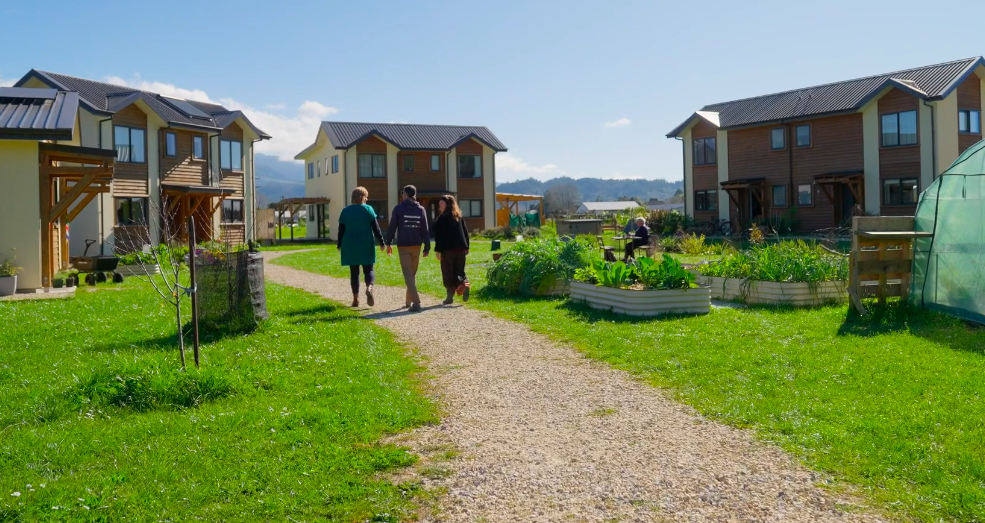
Kōwhai Cohousing (formerly Takaka Cohousing) is a 34 homes, community-oriented neighbourhood situated in Takaka, Golden Bay’s main small town. It is based on a modern village model that combines privately owned homes with 2.5hs of shared common land. There are many green spaces, from private gardens to shared growing spaces, open lawn spaces for the children to run around in and shelterbelt plantings. There is a 80 cm high bund around the property and a retention pond to protect this low-lying land from flooding.
The cohousing is designed to support intergenerational connection, shared values, collaboration and increased wellbeing. Neighbours maintain their own homes while sharing some gardens, green spaces, and certain facilities, creating opportunities for both independence and community interaction. The Common House is the hub of the community. It's where the residents can gather for meals, making decisions together, celebrating and connecting. It’s a traditional timber-frame structure, made from local timber and hempcrete blocks. There is also a large workshop-garage area for woodwork, craft and other creative projects.
Braemar Ecovillage
Location: Nelson, NZ
Accepting New Members: No
Land Size: ~20–25 hectares (approx. 50–60 acres)
Website: https://braemarecovillage.org.nz/
Braemar Ecovillage is a 40 people land-based intentional community in the Nelson/Whakatū region, comprising 15 privately owned homes, alongside shared communal land and facilities. Residents are united by a shared purpose of living sustainably, walking lightly on the planet, and contributing their skills for the common good. The community emphasizes environmental stewardship, shared responsibility, and creating a supportive and inclusive environment where both people and land are nurtured.
Daily life is guided by an “everyone does their bit” ethos, with residents actively participating in caring for gardens, tending animals (chickens, sheep, pigs), maintaining infrastructure, and contributing to community governance and decision-making. Regular working bees, meetings, and social gatherings are part of the rhythm of life, alongside a strong culture of mutual support and connection. Visitors can expect to experience a grounded and collaborative community atmosphere, gain insight into the practical realities of small-scale ecovillage living, and see how sustainability and cooperation are integrated into everyday life.
Anahata Retreat Centre
Location: Golden Bay, Tasman Region, NZ
Accepting New Members: Maybe
Land Size: ~35 - 60 hectares (approx. 100 acres)
Website: https://www.anahata-retreat.org.nz
Anahata Retreat Centre is a residential spiritual community and retreat center overlooking Golden Bay and surrounded by native forest. Founded in 1996 and operated by the Anahata Yoga Health & Education Trust, a non-profit charitable organization, the community is dedicated to sharing traditional yoga practices and living in alignment with ecological principles. Residents follow a lifestyle rooted in yoga, meditation, simplicity, and sustainability, with a focus on living in harmony with nature and one another. They have a highly organised residential community structure which is grounded in spirituality applied in daily work, such as providing shared meals, chopping wood, building maintenance and gardening.
Anahata offers a peaceful sanctuary for personal growth, healing, and self-discovery, hosting a range of retreats, trainings, and volunteer opportunities throughout the year. Visitors can expect a structured yet welcoming environment, nourishing vegetarian meals, and an immersive experience in a supportive and inspiring setting, with expansive views over Golden Bay and a strong emphasis on inner development and mindful living.
Rainbow Valley Community
Location: Golden Bay, Tasman Region, NZ
Accepting New Members: Maybe
Land Size: ~40 hectares (approx. 100 acres)
Website: https://rainbowcommunity.org.nz/rainbow-valley-community-golden-bay.php
Rainbow Valley Community is an intentional community in Golden Bay grounded in shared land stewardship, cooperative participation, and a commitment to non-violence. For over 40 years, the community has developed its own evolving structures, agreements, and ways of living together—guided not by a single ideology, but by a genuine willingness to collaborate. Today, it is home to a diverse mix of long-term residents, families, and visitors, including woofers and short-term guests, creating a multigenerational and dynamic village environment.
Residents live in privately owned homes and are responsible for their own incomes, while sharing responsibility for communal land, facilities, and community life. The Community House serves as a central hub for meetings, celebrations, and shared meals, and operates as a guesthouse during the summer months. With a strong connection to the natural environment, many residents maintain gardens and grow their own food. Visitors can expect to experience a relaxed and lived-in community atmosphere, explore the surrounding landscape, and gain insight into a long-standing, evolving approach to cooperative living.
Atamai Village
Location: Moutere, Tasman Region, NZ
Accepting New Members: Yes (conditionally)
Land Size: 130 hectares (approx. 320 acres)
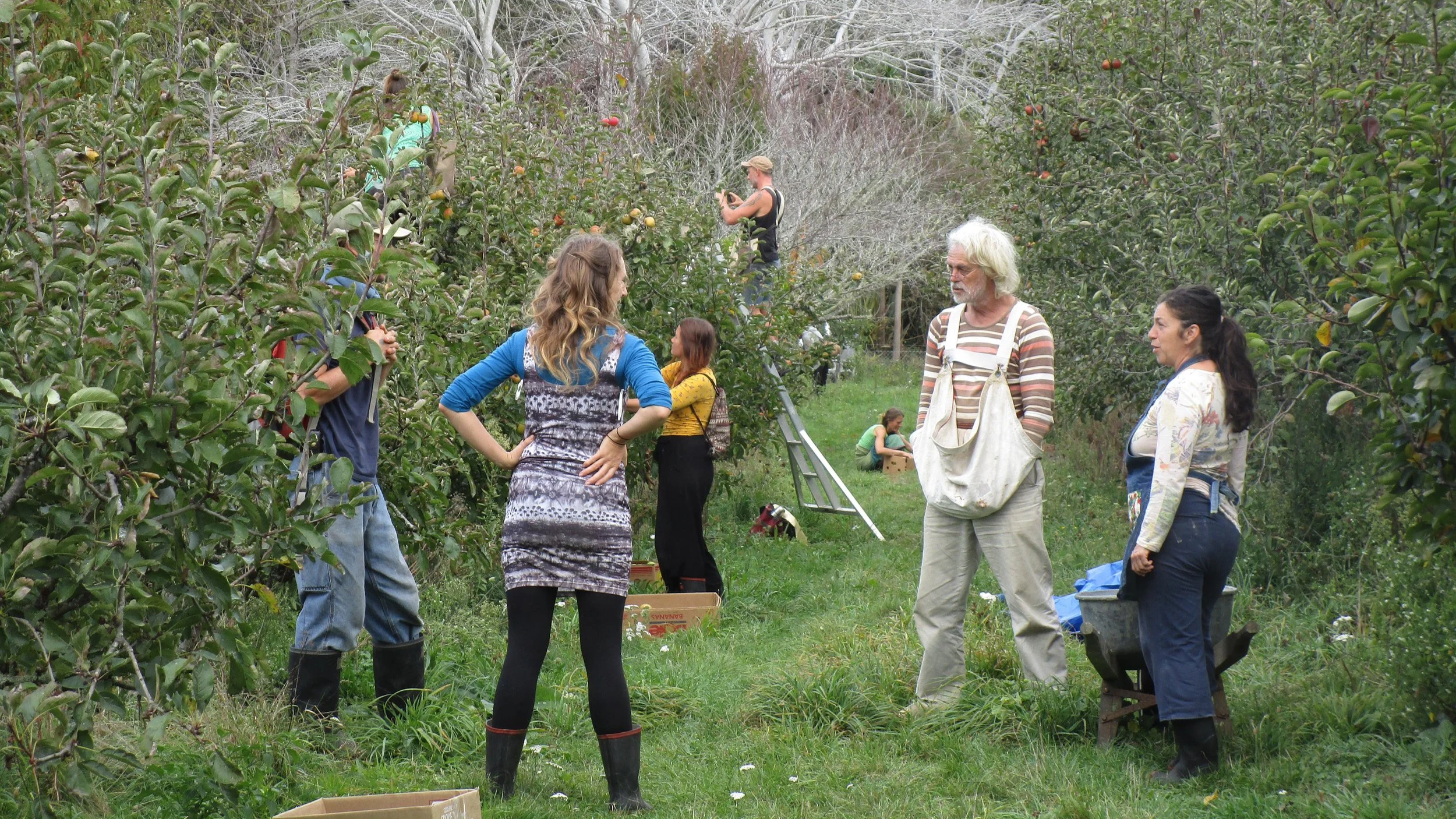
This permaculture-based settlement was founded in 2006, and is now home to around thirty households, but has regional authority planning permission for fifty. Atamai was founded on the principle of resilience - the ability to adapt and respond positively to challenge and change, aiming to withstand issues such as climate change, energy descent, limits to growth, and food supply. The original mission was to create a resilient community using a traditional village design enhanced with permaculture principles –social and economic exchanges, a sustainable ecological footprint, private dwellings and shared Commons. The 10ha of Commons includes 1ha of semi-commercial organically managed heritage orchard featuring 20 species of fruit and nuts. The original monoculture pine forest on the land has been transformed into a sustainable forestry operation, they have done a lot of planting of amenity trees and native species, to regenerate the ecology of the area.
WantooWantoo Community
Location: Moutere, Tasman Region, NZ
Accepting New Members: No
Land Size: 14 hectares (approx. 35 acres)
You tube film: ‘A Different Kind of Living’ https://www.youtube.com/watch?v=lBMbJmv5zvw
The land of Wantoowantoo (named after its street address, 1212) is owned by a single family. The people living on the land long-term either own their dwellings or rent them from the family. There are 14 people living on the land across 7 households.
The glue that binds this community together, in its aim to create a peaceful and cooperative way of life, is the practice of NVC (Nonviolent Communication), which is used to build connection and resolve conflicts as they arise.
Some residents garden together, while others care for animals together. Their simple collective motto is:
“We only do things when we want to do them… not when we have to.”
Trip Details
Explore detailed trip information to prepare for your adventure.
Included
All tours and activities at intentional communities
All ground transportation from tour start and end point
All lodging in shared rooms (Single room upgrades available)
All meals, except when you choose to eat separately
Not Included
Transportation to/from country
Insurance of any kind
Alcoholic beverages and extra drinks
Optional gratuities to guides
Laundry fees and items of a personal nature
Trip Pricing
Click “Book Now” to see current pricing and available discounts. Payment plans available. Pricing subject to change, but your rate is guaranteed with your deposit. All prices listed in USD.
Super Early Bird
$2,999 | first 5 participantsEarly Bird
$3,299 | ends Nov 1, 2026Normal Price
$3,629
🎓 Limited work trade scholarships are available. Learn more and apply.
Travel Logistics
We recommend booking a flight to/from the Nelson Airport (NSN). You can fly to this provincial airport from international airports of Auckland, Wellington or Christchurch.
Our tour will begin at 2:30pm local time on the start date at the Nelson Airport. Please plan to arrive by 2:30pm or earlier that day, in order to be on time to leave with the group from the airport at 3pm.
Our tour will will end back at the Nelson Airport where the journey began. We will arrive by 11:15am on the last day of the tour for flights departing midday or after. Please schedule your flight departures for no earlier than 1pm that day or choose to stay on the South Island longer.
Lodging
Lodging varies from shared rooms to simple private rooms, depending on availability. Rooms will be shared with fellow travelers. We will separate male and female rooms whenever possible, while couples and families are placed in private rooms whenever possible.
You can upgrade to a private room when booking (select the $800 single room supplement). Private rooms are not always guaranteed, due to the nature of some locations.
Overnight accommodations will be at the ecovillages and communities we are visiting, apart from twice, when we will be staying at: Shambala (https://shambhala.co.nz/) and The Sandcastle (https://www.sandcastle.nz/). This allows for a more immersive experience of what it’s like to live in a community. Some accommodations may be rustic, emphasizing sustainability and affordability over luxury. Some may include limited Wi-Fi, and have composting toilets, and other communal facilities.
Meals
As much as possible our meals will be fresh, local and organic, with produce grown on-site. Most meals will be vegetarian. When eating out at restaurants, we will sometimes have a fixed menu with a few options of local specialties. One beverage is usually included with lunch and dinner. Extra dishes and drinks are on you. We can accommodate a range of dietary requirements, to a point, so please contact us to inform us about any food allergies and come prepared with your own specialty food or supplement needs. We will stop at grocery stores where you can purchase your own snacks.
Weather
Nelson City and Tasman District are located in the most north-westerly part of the South Island and generally are the first to be influenced by weather systems moving onto the island from the north. The area is well exposed to these systems, whereas it is sheltered a great deal from systems arriving from the south. Temperatures are mild compared with the rest of the country, with the region’s close proximity to the sea resulting in a relative lack of extreme high and extreme low temperatures. Rainfall is fairly evenly distributed across the year, although February and March are typically the driest months of the year. Nelson and Tasman are renowned for receiving a great deal of sunshine with average annual sunshine hours (approximately 2,400 hours) being among the highest recorded in New Zealand.
March in the Nelson-Tasman region is characterized by pleasant, mild late-Summer weather, with typically sunny days and cool nights. Daily highs average around 20 C degrees (68 F), while nighttime lows drop to around 12 C degrees (57 F). March is one of the clearest stable months of the year, although moderate rainfall is still common, with an average of roughly 99 – 108 mm over the month.
Packing
A full packing list will be provided after booking the tour. Laundry service will be available at some of our locations. Due to the limited space in our vehicles, each passenger will only be allowed one suitcase and one day bag. There will be scope to wash and dry laundry at locations we have more than one overnight stay.
March is a great time for outdoor adventures, including swimming, although the sea temperatures are cooling down a bit. We have taken the late afternoon high tides into account when doing the tour scheduling. Make sure you bring a bathing costume and towel. Other items you need to be sure to have are: a torch/flashlight or headtorch, warm garments, raincoat, good walking shoes/boots.
Always sheets, pillows and a blanket will be provided, however you’ll want to bring a main towel and travel towel.
Meet Your Guides
Get to know your ambassadors to community in New Zealand.
Robina McCurdy
LEAD GUIDE
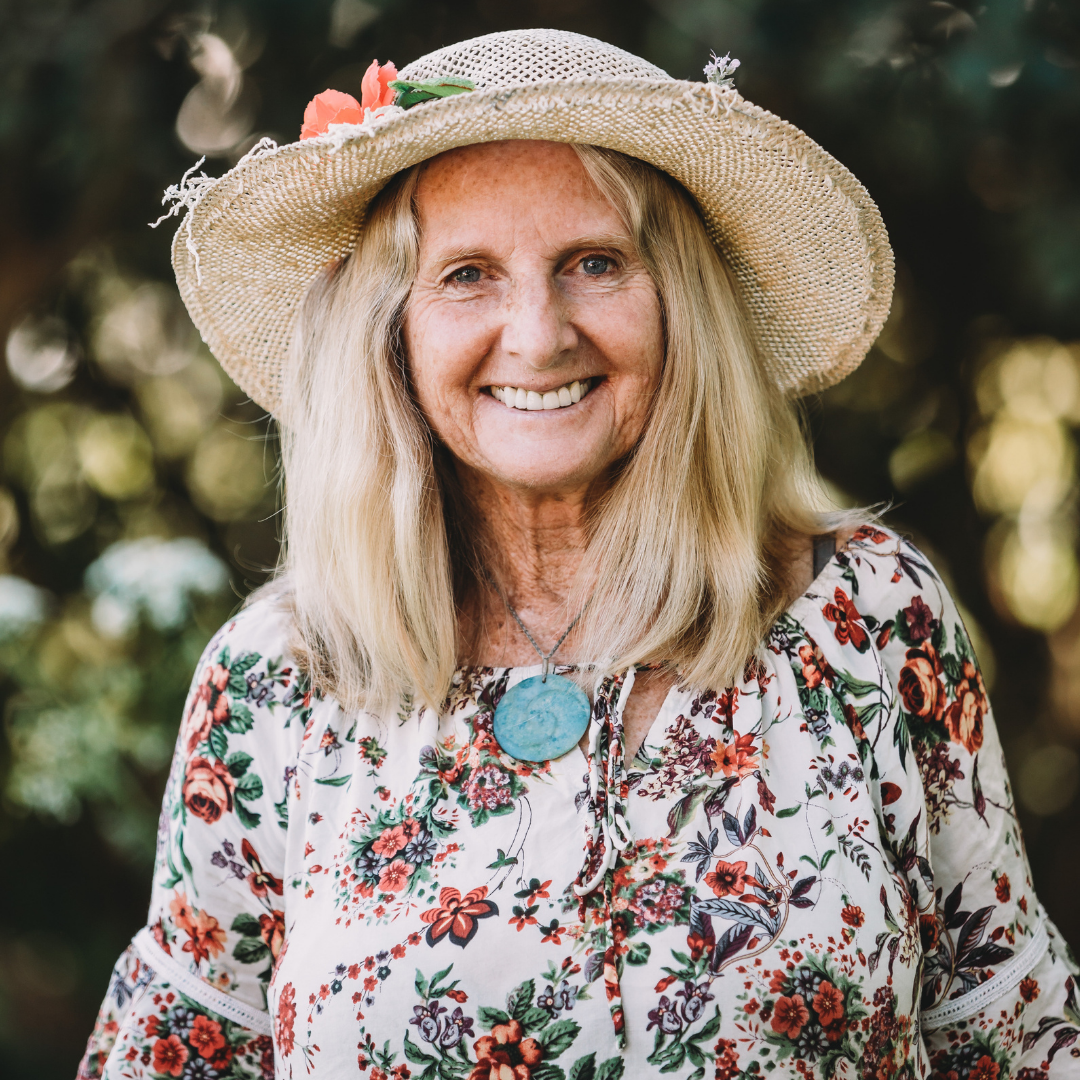
Robina is an international community development facilitator, permaculture educator, organic food grower, pioneer resident of the 42-year-old Tui Community & Trust, and founder of The Institute of Earthcare Education Aotearoa (New Zealand) and SEED (South Africa & Brazil). She currently serves on the GENOA (Global Ecovillage Network Oceania & Asia) Council. Robina's work encompasses "midwifing" new initiatives, mentoring emerging ecovillages, supporting the social renewal of existing communities, facilitating long-term conflict resolution, and strengthening community culture within organizations. Along the way, she has produced community facilitation manuals, localizing food documentaries, and participatory process guides for collective action.
One of Robina's greatest passions is introducing people to inspiring on-the-ground projects and habitats that she sees as models for a sustainable future. Her favorite way of doing this is through crafting and guiding immersive educational tours that combine meaningful learning with time in nature. She has organized regional and national permaculture tours throughout New Zealand and has incorporated site visits and community immersions into every one of the more than 30 full permaculture courses she has taught.
Robina is excited to share some of the finest residential communities and ecovillages in her home region with participants on the New Zealand Ecovillage Tour. Every community on the itinerary has been selected through her decades of personal relationships and connections, offering a trusted door-opening into communities that are often private and rarely experienced by visitors.

Charley Bradley
SUPPORTING GUIDE
Charley will be serving as both the bus driver and occasional cook for our 2027 New Zealand Ecovillage Tour, helping create a smooth, welcoming, and enjoyable experience throughout the journey. He previously served as a bus driver for Earthcare's Permaculture Tours and brings a wealth of practical experience in sustainable living, community development, and regenerative systems.
A resident of Tui Community and Trustee of the Tui Spiritual & Educational Trust, Charley is also a permaculture consultant and educator with Earthcare Education Aotearoa. He currently coordinates land and building projects at Tui and has developed extensive hands-on skills through decades of community living, including 30 years in a rural community in the Azores Islands of Portugal and 10 years sailing on his self-built yacht.
Charley has visited numerous intentional communities throughout New Zealand and Australia and brings a deep understanding of both the practical and social aspects of community life. Drawing on his background in psychotherapy, Nonviolent Communication (NVC), restorative justice, and sociocracy, he is skilled at supporting healthy group dynamics and fostering cooperation, connection, and resilience within communities. Charley is committed to the creation and stewardship of intentional community as a pathway to living in conscious relationship with all life, where the flourishing of each supports the wellbeing of the whole.
Reviews
Read authentic reviews from participants on past Ecovillage Tours.

One of the greatest experiences I have ever had. A completely unique journey to some wondrous ecovillage projects, full of inspirational humans. To share the tours with others with similar visions was enriching and a real privilige. I left feeling fulfilled and educated.
— Adam Bates

Ecovillage Tours has put something really special together. The amount of research and care they have put into this trip is impressive in and of itself and have helped facilitate meaningful connections both within the tour group and with the communities hosting us. This eye opening experience has the potential to change your life by exploring more unique paradigms.
— Nathan Oxenfeld

It is an experience worth paying for. You get to know places and people who are on the real hands on effort for bringing change and make local ecosystems more resilient.
— Edward Bryce

Best summer camp ever! A must see!! People, food and lodging were more than I could have hoped for in a travel experience like this!! Definitely will be back.
—Megan Zimmerman
Is this tour right for me?
On the fence? Discover if this tour is meant for you.
Choosing to embark on an ecovillage tour is an investment in your journey into intentional community living. Thanks to years of relationship building with community founders, we’re able to give you an experience that’s simply not available to the regular traveler.
Still unsure?
Explore if this tour is right for you…
This tour ideal for those who want to:
Join intentional communities: Engage directly in projects that focus on environmental and social regeneration, creating vibrant, sustainable spaces for communal living.
Explore sustainable living: Dive into the world of ecovillages as a lifestyle choice, integrating principles of ecological balance and community harmony into your daily life.
Network with regeneration leaders: Forge deep connections with key figures in the regenerative movement, gaining inspiration and momentum to advance your life's purpose.
Get a true eco-vacation: Embark on adventure travels that support ecovillages, choosing experiences that contribute positively to the planet and align with your values.
Learn from successful projects: Observe and study the approaches of others, applying their strategies and innovations to develop your own land or community initiative effectively.
Why choose this tour?
Knowledgeable guides: Led by experts in ecovillages and intentional communities, as well as experienced group facilitators.
Authentic experience: We partner with local communities for a genuine and unfiltered experience.
All-inclusive: From eco-friendly lodging to local cuisine, we've got you covered.
Small group size: We limit the number of participants to ensure a personalized and intimate experience.
Hassle free travel: We cover all the logistics, so you can get the most out of the experience.
What’s the alternative?
You could try visiting intentional communities on your own, except that…
Many communities are not open to the public and, if they are, the founders will not give you their undivided attention as a just normal passer-through.
Figuring out the logistics of getting yourself around is a headache and you’ll have no immediate support if something goes awry.
Traveling alone isn’t as nourishing or nearly as fun journeying with a small group in an intentionally held container for connection.
It’ll take years of relationship building and financial investment to even come close to the experience that Ecovillage Tours is able to offer… because we’ve done all that work for you already!
Still have questions?
We are happy to help!
Ready to go?
The communities are excited to welcome you.
Let your adventure begin.